Brand teams are being pushed to “use AI” in almost every activation, but the pressure to include it is not the same as the need to use it well. In many cases, the most useful question is not whether AI should be present. It is whether AI helps the audience feel something real, remember something meaningful, or move through the experience with less friction. That distinction matters because experiential work depends on trust, judgement and context, not just novelty.
In South Africa and beyond, the strongest brand experience work still starts with the human experience. People notice when an activation feels generic, overly automated or built to impress the client rather than serve the audience. At the same time, AI can be genuinely useful when it improves relevance, speed, access and production quality. The challenge is to design AI in experiential marketing so that it supports the idea instead of becoming the idea.
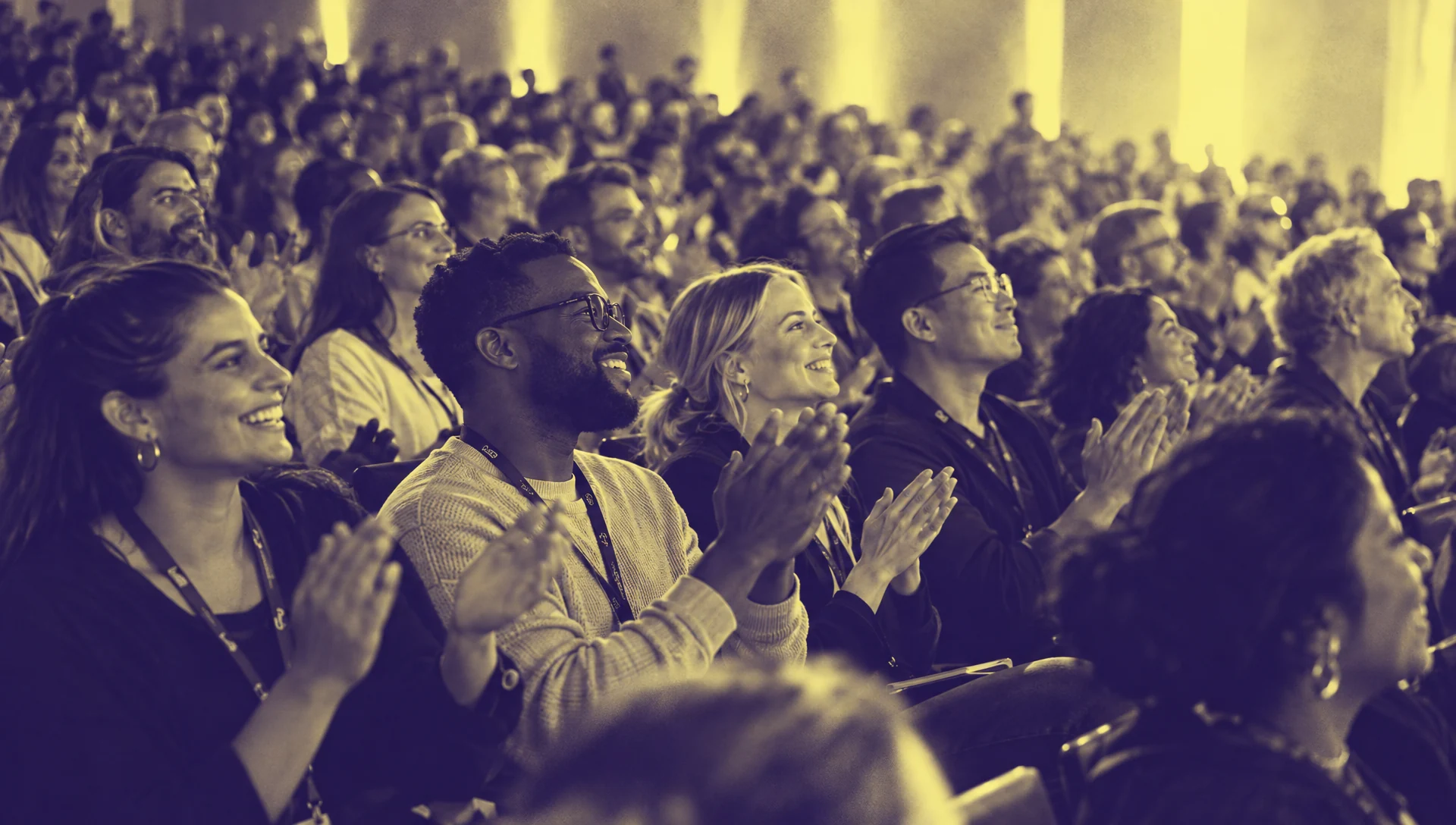
Just because you can use AI, should you?
We are now well past the stage where AI in experiential marketing can be treated as a decorative layer. Audiences recognise when technology has been bolted on because it sounds current. They also recognise when an experience has been designed with no real understanding of how people behave in a live setting. That creates a difficult but productive tension for brand teams: the activation must feel contemporary, yet not synthetic; impressive, yet not detached from the brand’s purpose.
That is why AI brand activations need a clearer standard than “Was AI present?” A better question is, “Did the technology help the audience do, feel or understand something that would have been harder without it?” In some cases, AI may improve route planning, recommendation logic, translation, access support or follow-up content. In other cases, the best decision may be to keep AI out of sight and let the physical environment do the work. The point is not to advertise the system. The point is to strengthen the experience.
This is especially important in AI event marketing 2026, where the novelty cycle is already shortening. The audience does not need another activation that performs innovation for its own sake. It needs a reason to engage, and that reason is usually found in the quality of the idea, the relevance of the moment and the clarity of the interaction.
The things a screen can't replace
If AI can generate content, suggest products, personalise messages and simulate a wide range of interactions, then what is left for the physical experience to do? A lot. In-person work still offers things no screen or model can fully replicate: shared atmosphere, co-creation, human presence, sensory depth and real-time context. Those qualities are not sentimental extras. They are the reason brand experience still matters.
A live activation can build trust because people see how a brand behaves when they are present. They can ask questions, compare reactions, test products, watch others respond and form their own judgement. They can experience scale, texture, pace and energy in a way that is difficult to reproduce digitally. That is one reason experiential marketing remains valuable even as AI becomes more capable. The physical layer is not a replacement for technology. It is the stage where meaning becomes tangible.
Read the full section
The useful question, then, is not whether AI can make the moment more impressive. It is whether the moment is still worth experiencing in person after the digital efficiency has been stripped away. If the answer is yes, the experience has something solid at its core. If the answer is no, AI may be helping to disguise a weak idea.
That is where a strategy-led approach matters. Not every brand experience needs a visible AI feature. Some need sharper relevance. Some need better logistics. Some need more accessible information. Some need a more thoughtful invitation to participate. The technology should follow the decision, not replace it.
Where AI actually earns its place
AI becomes valuable when it improves the parts of an activation that people usually experience as effort, delay or irrelevance. Personalisation is one obvious area. In artificial intelligence experiential marketing, AI can help shape content pathways, product recommendations, language support or audience prompts so that the activation feels more relevant to the individual without losing the integrity of the shared brand moment. Done well, that can make the experience feel more attentive, not more mechanical.
Operational value matters too. Crowd flow, scheduling, production planning, staffing logic and accessibility support are all areas where AI can assist teams before and during an event. That does not make the experience magical. It makes it more workable. In a live environment, utility is often what protects the quality of the idea. Better timing, clearer wayfinding and less friction can change how the audience receives the brand, even if they never notice the system behind the scenes.
Read the full section
AI can also support content utility on site. Translation, retrieval, wayfinding prompts and assistive interfaces can help more people participate with less effort. In practical terms, that broadens access to the experience and makes the brand feel more considerate. In a South African context, that sensitivity matters. A brand experience should not assume one language, one pace or one mode of interaction if it wants to serve a wider audience well.
There is also value in learning. AI can help teams process what happened, spot patterns and improve future decisions. That should never be confused with a guarantee of better outcomes. It is simply a more informed way to review the work. In experiential marketing, better learning is useful because live experiences are expensive to build and difficult to repeat exactly. If AI improves the quality of insight, it can improve the quality of the next decision.
Across these use cases, the pattern is the same. AI does its best work when it supports personalisation, production utility, accessibility and relevance. It is less useful when it is introduced only to prove that a team is keeping up with the moment.
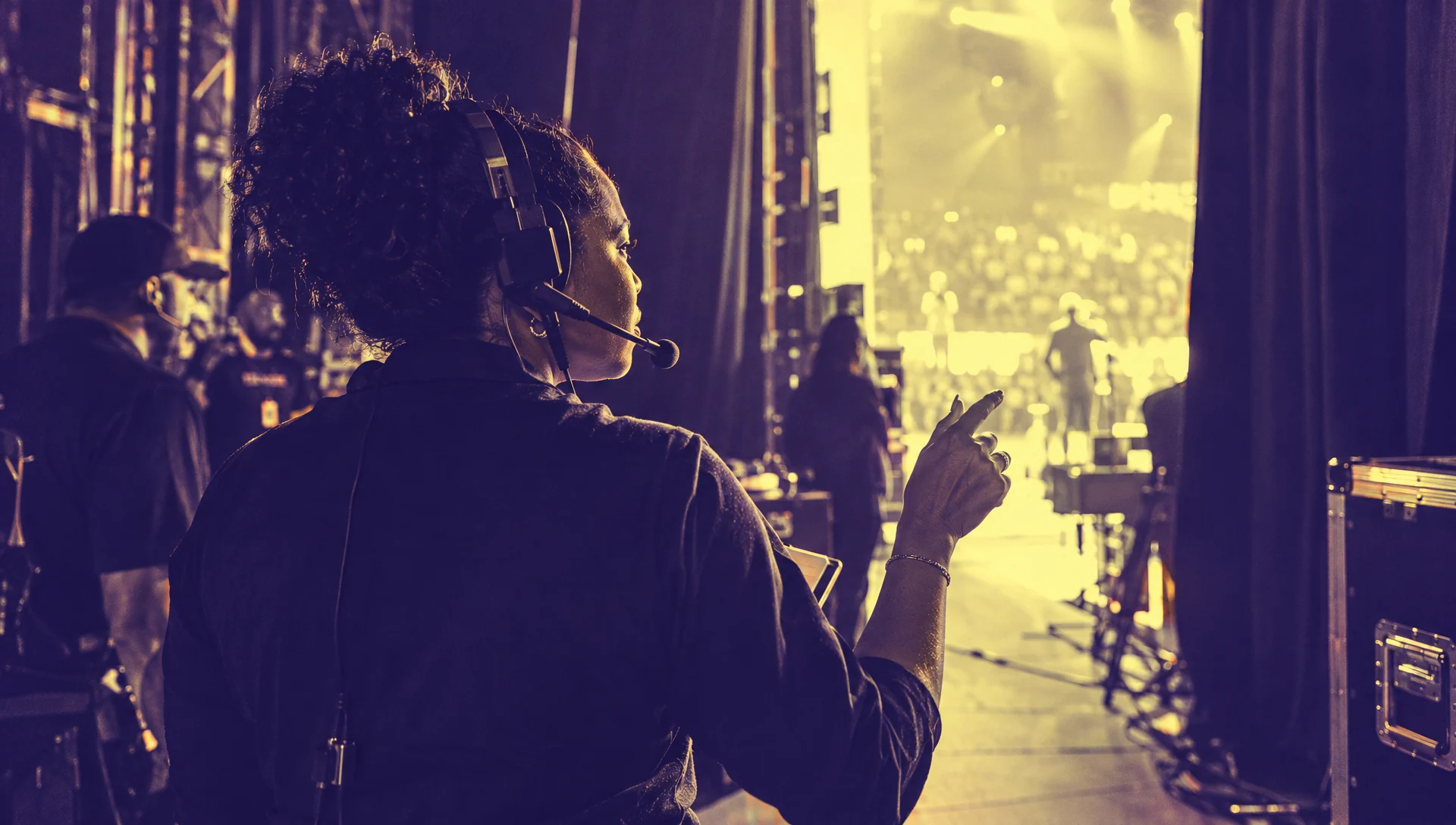
The best tech doesn't steal the spotlight
The most sophisticated event technology often feels less visible, not more. That should be a useful principle for brand teams. If AI is doing its job well, the audience may never focus on the model itself. They notice that the experience is smoother, more relevant or easier to navigate. In other words, the infrastructure becomes invisible and the brand experience becomes clearer.
This is a useful corrective to the current rush toward spectacle. Not every activation needs an AI headline. Some need AI quietly embedded behind the scenes so the physical experience remains primary. That may mean using AI to adapt content, manage flow or support on-site service while the creative concept stays human-led. It may mean designing a moment where the audience sees the result of intelligent systems but never has to think about the systems in order to enjoy it.
That approach respects the brand as well as the audience. It avoids the trap of over-explaining the technology and under-explaining the idea. It also keeps attention where it belongs: on the emotional, sensory and strategic value of the activation. When technology starts competing with the experience, it usually weakens the result.
Human judgement is still the headline
AI can accelerate execution, but it cannot decide what a brand should stand for in a live setting. That is where human judgement remains central. Creative teams still need to decide what matters, what feels right, what creates trust and what carries risk. Those are not technical decisions alone. They are brand decisions.
In experiential work, that matters because every choice is public. The materials, language, flow, tone and interaction design all shape what the audience thinks the brand values. AI can help generate options, organise information and reduce friction, but it cannot carry the accountability for the final experience. Someone still has to decide whether the moment is respectful, relevant and consistent with the brand’s intent.
Read the full section
There is also an ethical dimension. AI can make it easier to personalise, automate and adapt, but not every capability should be used simply because it exists. Teams still need to think about transparency, inclusion and the risk of creating a moment that feels invasive rather than helpful. A good brand experience earns attention. It does not assume entitlement to it.
That is why the most credible AI experiential marketing will probably look less dramatic than many people expect. It will be shaped by a clear creative purpose, practical judgement and careful execution. It will not treat technology as proof of intelligence. It will treat technology as a tool that must earn its place.

Start with the objective. Build for the audience.
A useful way to approach this work is to move from objective to audience to architecture to execution to learning. Start with the business or brand objective. Then define the audience action you actually want. From there, design the experience architecture: what happens first, what supports participation, what builds momentum and what makes the moment memorable. After that, production turns the idea into something that can work in the real world. Finally, review what was learned and use that insight to improve the next decision.
That framework reflects a more integrated view of experience design. It avoids separating strategy from production, or creative from operational thinking. In practice, those separations are where weak activations often begin. A smart brand experience is not only conceptually strong. It is also buildable, accessible and responsive to the environment around it.
Read the full section
This is where a Question Everything mindset becomes useful. Ask what the experience is really for. Ask what people will notice, remember and do. Ask where AI supports that journey and where it distracts from it. Ask whether the physical moment still has value without the technology layer. Those questions do not limit creativity. They make it sharper.
That same discipline is what keeps event strategy connected to the real world. It is easy to chase what is new. It is more valuable to design what lasts long enough to matter. That is true whether you are building an intimate launch, a large-scale brand activation or a more complex experience that needs to hold together across multiple touchpoints.
Let AI support the experience, not become it
AI in experiential marketing is most effective when it improves relevance, access and execution without taking over the meaning of the work. That is the standard brand teams should hold. Use the technology where it adds value. Remove it where it gets in the way. Let the physical experience do what only a human-led brand moment can do.
Use the technology. Don’t let it become the idea. If your next activation needs sharper thinking around experiential marketing, brand activations or event strategy, the right next step is to build the experience from the audience out, not the platform in. Explore selected work and apply the same principle to the next brief: meaningful, trustworthy, and physically compelling.
Build something people want to experience
If you are planning your next activation, use AI where it improves the experience and keep human judgement at the centre of the idea. The strongest work is still the work that feels relevant, trustworthy and worth showing up for.