

Conference agenda design gets difficult when every speaker, topic and business priority seems essential. But a packed programme is not proof that delegates will leave with the right understanding. The useful question is more direct: what should they know, decide or be ready to do when the conference ends?
That question gives organisers a way to make tough choices without treating every proposed session as equally important. It also connects content with the delegate experience and the practical demands of producing a conference. For conference owners in South Africa, Chaos Theory brings programme and production coordination together, so the agenda can be considered as part of the whole event, not simply a list of times and titles.
Start conference agenda design with delegate outcomes
Before adding sessions, write down the outcomes the conference needs to support. Keep them specific enough to guide decisions. “Understand the new direction” may be a start, but organisers should ask what delegates need to understand about it. “Agree on the priorities for the next phase” points towards a decision. “Know how to apply the updated process” suggests that explanation alone may not be enough.
These are different kinds of outcomes, and they call for different kinds of sessions. A presentation can introduce an idea or explain a change. A discussion can surface questions and competing perspectives. An application exercise can help people work through what the change means in practice. Networking can give delegates time to exchange experience and make connections relevant to the conference’s purpose.
Not every conference needs an equal share of each format. The point is to choose deliberately. If a session is meant to produce a decision, a series of presentations may provide useful context but leave too little space to make that decision. If the aim is to explain a complex topic, discussion without a clear frame may leave delegates with more questions than understanding.
For each proposed session, try completing this sentence: “After this, delegates should be able to…” If the answer is vague, the session may need a clearer purpose. If two sessions have nearly identical answers, they may be doing the same job.
Edit the programme around the outcomes
Imagine a hypothetical conference agenda with a leadership welcome, three presentations on closely related strategic priorities, a panel revisiting the same themes, a product update, a practical workshop and a long closing presentation. Each item might have a reasonable case for inclusion. The programme as a whole may still ask delegates to listen to similar messages several times, while leaving little room to work through their implications.
Begin the edit by grouping sessions according to the work they do. Which introduce the direction? Which explain a priority? Which invite a decision, question or practical application? This makes repetition easier to see without assuming that repeated ideas are always unnecessary. A key message may deserve reinforcement, but each appearance should add something: new evidence, a different perspective, a clear decision or a chance to apply the idea.
Combine sessions that share a job
If two presentations cover overlapping priorities, ask whether they could become a single, more coherent session. The speakers might contribute distinct perspectives within that session rather than appearing in separate slots. If their topics are related but serve different purposes, make those purposes visible in the programme and in the session framing. The aim is not to squeeze more speakers into less time; it is to give the content a shape that makes sense to delegates.
A panel should also have a reason to exist beyond putting several speakers on stage. It may be useful when those speakers can explore genuine differences, answer questions or connect themes introduced earlier. If it simply repeats the presentations, the agenda could use that time for delegate discussion or application instead.
Remove what does not support a clear outcome
Some proposed sessions may be interesting but not essential to the purpose of this particular conference. Others may repeat information delegates can receive in a more suitable format. Removing an item is not a judgement on the speaker or the subject. It is a decision about what the programme needs to do for its audience.
In our hypothetical programme, that might mean combining two strategy presentations, replacing the repetitive panel with questions and discussion, and moving a non-essential product update into supporting material. The workshop would then have room for delegates to apply the priorities, while the closing session could confirm decisions and next steps. The edit creates a clearer progression, rather than merely a shorter day.
Balance presentation, discussion and application
Presentations have an important role. They can set context, share information and give a conference a common starting point. The problem is not presentation as a format; it is relying on it to meet every learning objective. When delegates need to compare views, raise concerns or make sense of what a message means for their work, they need an opportunity to do more than listen.
Discussion can help expose what the programme has not yet answered. It can also help organisers understand where perspectives differ. Application takes the next step: delegates consider how an idea, priority or change relates to a practical situation. These formats support delegate learning when their purpose is clear and the activity follows naturally from what delegates have heard.
Consider the order as well as the mix. A discussion is easier to engage with when delegates have enough context. An application session may work better after the core idea has been introduced. A closing slot can then bring the important threads together or establish what happens next, rather than introducing a fresh set of priorities at the last moment.
There is no universal session length that guarantees attention or learning. The appropriate duration depends on the content, the format, the audience and what delegates are expected to do. A presentation that needs time to explain a complex subject has different demands from a short update. A workshop needs space for its activity, not just its introduction. Build the timing around the work of the session, then check whether the whole programme is manageable and varied.
Make networking part of the experience
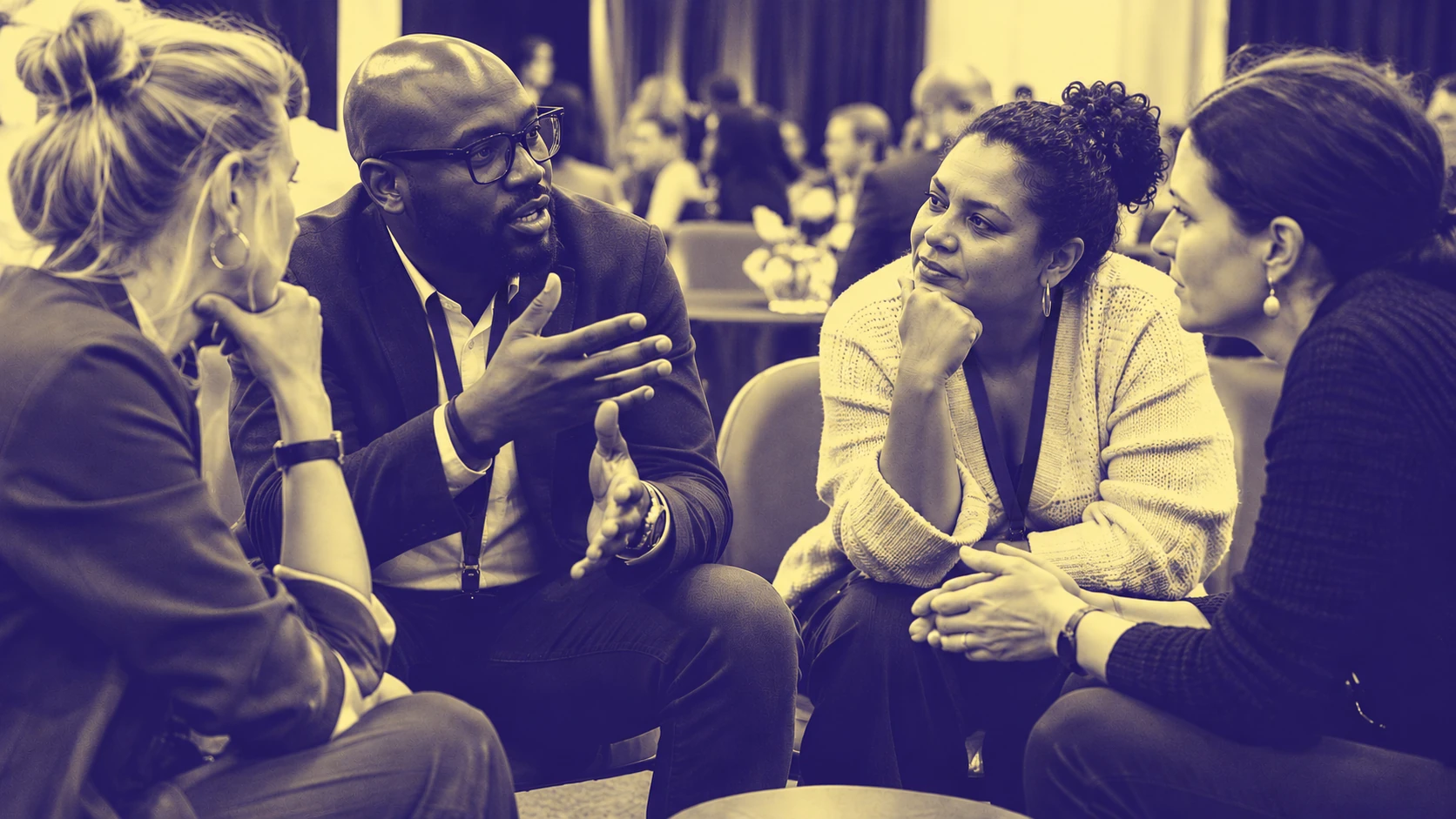
Networking can end up in the gaps around the “real” programme. That risks making it an afterthought, even when connecting delegates is a genuine event objective. If people need to exchange ideas, build relationships or compare how they approach a shared challenge, the programme should give those interactions a clear place.
This does not mean adding a networking slot simply to fill time. Consider who needs to meet, what they could usefully discuss and how the event can make that interaction possible. A well-placed break may be sufficient for informal conversation. A more structured opportunity may suit an objective that depends on specific groups sharing perspectives. In either case, recognise the time and transition the experience requires.
Networking also affects the rhythm of the day. A programme filled tightly from start to finish can leave delegates with little room to reflect, move between sessions or continue a useful conversation. When reviewing the agenda, look beyond the session titles. Consider how one part of the experience leads into the next and whether the pace supports the intended outcomes.
Check the programme as a whole
Once the content is clearer, read the agenda from a delegate’s point of view. Does it establish why the conference matters? Do sessions build on one another, or do they feel like disconnected contributions? Is there a sensible progression from context to discussion, application or decision? Can delegates see what each session is for from its title and description?
Then consider the production implications. Changes to the programme can affect speakers, presentations, transitions and the overall delegate experience. That is why conference programme planning is not separate from production coordination. A shorter or combined session may change how speakers prepare; a practical activity may need a different setup from a presentation. Programme and production teams need to understand the intention behind the change so that the event can support it.
Chaos Theory’s work for the Protea Hotels GM Conference involved content, speakers, presentations and delegate experience for 120 GMs and stakeholders. That scope illustrates why conference management needs to consider both what delegates encounter and how the programme is brought together. An agenda needs more than editorial clarity: the people delivering it must understand how each contribution fits.
A final review can be simple. For every session, identify its outcome, format and relationship to what comes before and after. Mark overlap. Decide whether to combine, reshape, reposition or remove the item. Then check that the revised programme still gives delegates the information, interaction and time they need to leave with a clearer understanding.
Give every session a reason to be there
If your conference programme is carrying too many priorities, let’s start with what delegates should leave understanding, deciding or applying. Discuss those objectives with Chaos Theory, alongside the content, audience experience and production needed to turn a full agenda into a purposeful conference.
Related Posts
Event Success Metrics: Look Beyond the Full Room
A full room is one result. Build a measurement plan that explains audience…

Simultaneous Multi-City Event Planning: One Launch, Two Rooms
Simultaneous multi-city event planning for one clear launch message,…
An Event Content Capture Plan Starts Before the Moment
Build an event content capture plan around the shots, interviews, access and…